When Averages Lie: How the Timing of Market Losses Can Unravel a Retirement Plan
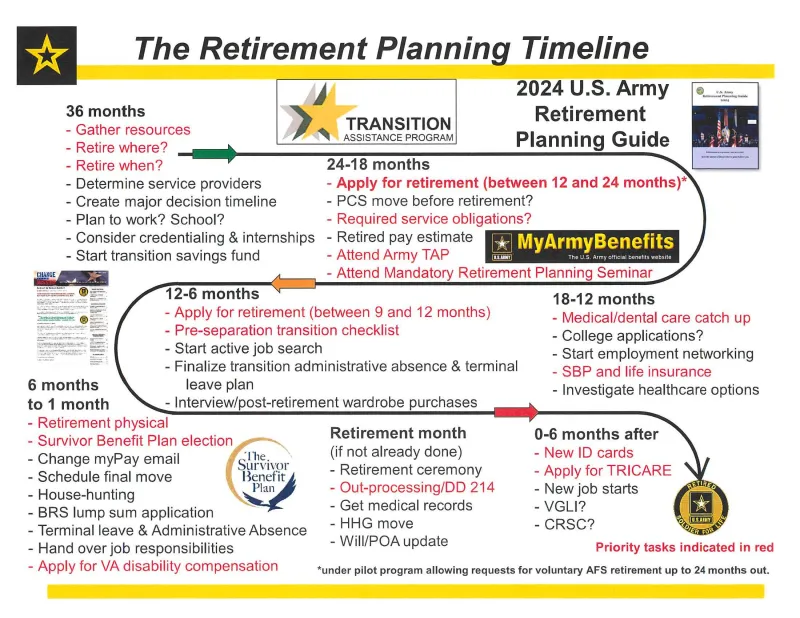
Photo: retirement portfolio planning financial calendar timeline, via home.army.mil
The Number That Doesn't Tell the Full Story
For decades, American investors have been conditioned to focus on one figure above all others: average annual return. Financial projections, retirement calculators, and even professional advisors often anchor their models to this single metric. Yet for anyone within a decade of retirement—or already drawing down a portfolio—average returns can be profoundly misleading.
The reason lies in a concept known as sequence of returns risk. In short, it refers to the danger that poor investment performance occurring early in the withdrawal phase can permanently impair a portfolio, even if the long-term average return appears healthy on paper. Two investors can experience identical 30-year average returns and arrive at dramatically different financial outcomes simply because of when their worst years happened.
At Equinox Broker, we believe precision in retirement planning demands more than headline statistics. Understanding the mechanics of this risk is essential for any investor who is actively transitioning from accumulation to distribution.
The Mathematics of Misfortune
Consider a straightforward example. Suppose two retirees each begin with $500,000 and withdraw $30,000 annually. Investor A experiences strong returns in years one through five, followed by a severe downturn in years six through ten. Investor B faces the same downturn first, then enjoys the recovery. Over a 20-year period, both portfolios may reflect the same average annual return—yet Investor B's portfolio, battered early while withdrawals continued, may be effectively exhausted years before Investor A's.
This asymmetry exists because withdrawals during a downturn force the sale of assets at depressed prices. Those shares, once liquidated, cannot participate in the subsequent recovery. The portfolio loses not just value but compounding capacity—the very engine that makes long-term investing effective.
The mathematical term for the actual growth rate experienced by a portfolio subject to withdrawals and variable returns is the internal rate of return, sometimes contrasted with the simpler arithmetic mean. These two figures can diverge sharply, particularly when volatility is high.
Lessons from 2008 and 2020
The 2008 financial crisis provides a sobering real-world illustration. The S&P 500 declined approximately 38% that year, and many investors who retired between 2006 and 2008 found their portfolios severely compromised before the recovery ever materialized. Those who retired in 2010, by contrast, benefited from years of post-crisis appreciation before facing their first major drawdown.
The 2020 pandemic crash offers a more compressed but equally instructive case. Markets fell roughly 34% between February and March 2020 before staging a rapid recovery. For retirees who had recently shifted to a withdrawal strategy, even that brief but sharp decline required liquidating assets at significantly reduced valuations. Those who had maintained a larger cash buffer or a structured income floor weathered the volatility with far less structural damage.
The critical distinction in both scenarios was not market timing in the speculative sense—it was whether the investor had built structural protections against having to sell equities during a downturn.
Strategies That Address the Sequence Problem
Recognizing the risk is only the first step. Translating that recognition into a coherent portfolio strategy requires deliberate planning across several dimensions.
The Cash Reserve Approach One of the most straightforward mitigations involves maintaining one to three years of anticipated withdrawals in cash or short-term instruments. This buffer allows a retiree to avoid selling equities during a correction, giving the growth portion of the portfolio time to recover. While holding cash carries its own opportunity cost, the protection it provides against forced liquidation often outweighs that drag over a full market cycle.
Bucket Strategies A related framework divides the portfolio into distinct time-segmented "buckets." The near-term bucket holds liquid, conservative assets to fund immediate income needs. A medium-term bucket contains bonds and dividend-generating holdings. The long-term bucket remains invested in equities for growth. Each bucket is replenished over time from the one ahead of it, insulating the equity allocation from short-term market disruptions.
Dynamic Withdrawal Adjustments Rigid withdrawal rates are a liability in volatile markets. Retirees who build flexibility into their spending—reducing withdrawals modestly during down years and allowing for modest increases during strong years—can dramatically improve portfolio longevity. Research consistently shows that even small reductions in withdrawal rates during a downturn can extend portfolio life by years.
Glide Path Recalibration Many target-date funds automatically reduce equity exposure as an investor ages. However, the standard glide path may not account for sequence risk with sufficient precision. Investors should consider whether their current asset allocation adequately buffers against a major drawdown in the first five years of retirement—often described as the most financially vulnerable window of the entire retirement period.
The Accumulation Phase Is Not Exempt
While sequence risk is most acute during the distribution phase, investors in the accumulation phase are not entirely insulated. A severe bear market in the final years before retirement can significantly reduce the capital base from which withdrawals will begin. This is why portfolio positioning in the five to seven years preceding retirement often warrants a more deliberate transition toward capital preservation, even for investors who consider themselves long-term equity holders.
This does not mean abandoning growth entirely—inflation remains a persistent risk for any portfolio that becomes overly conservative too early. Rather, it means introducing a more nuanced balance between growth assets and income-generating or capital-stable instruments as the retirement horizon approaches.
Precision Over Projection
The broader lesson of sequence of returns risk is that retirement planning cannot rest on averages alone. Probabilistic modeling—stress-testing a portfolio against historical drawdown scenarios, Monte Carlo simulations, and variable withdrawal frameworks—provides a far more honest picture of retirement readiness than any single projected return figure.
At Equinox Broker, our approach to wealth management centers on this kind of analytical rigor. A retirement plan that accounts for when returns arrive, not merely how much they average, is one built on genuine financial precision rather than optimistic arithmetic. In retirement, timing is not just a matter of preference—it is a structural variable that can define the entire outcome.