The Diversification Mirage: How Crisis Conditions Erase the Protection You Counted On

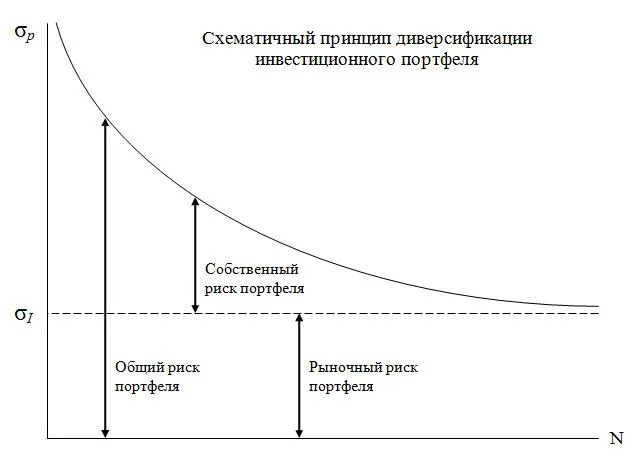
For decades, diversification has been treated as the closest thing to a free lunch in investing. Spread capital across uncorrelated assets, the logic goes, and the gains in one position will cushion the losses in another. In calm markets, this framework performs admirably. But the uncomfortable truth — one that experienced portfolio managers have long understood — is that traditional diversification tends to unravel at the very moment it is most urgently needed.
When financial markets enter a genuine dislocation, the correlations that appeared stable across years of historical data have a stubborn habit of collapsing toward unity. Assets that once moved independently begin moving together — and almost always downward. The hedge you believed you held turns out to have been a statistical artifact of benign conditions, not a structural feature of your portfolio.
Why Correlations Behave Differently Under Stress
Correlation is not a fixed property of any two assets. It is a dynamic relationship that shifts with market conditions, investor psychology, and liquidity availability. Under normal circumstances, different asset classes respond to different drivers: equities are sensitive to earnings expectations, bonds respond to interest rate policy, commodities track supply and demand fundamentals, and so forth. These distinct sensitivities produce the low or negative correlations that form the basis of classic portfolio theory.
During a crisis, however, those individual drivers are temporarily overwhelmed by a single, dominant force: the urgent need for liquidity. When institutional investors face margin calls, redemption pressures, or risk-limit breaches, they do not sell only their weakest positions. They sell whatever they can sell quickly. This forced liquidation transmits selling pressure across asset classes that would otherwise have no meaningful relationship with one another. The result is a market-wide correlation spike — sometimes called a correlation breakdown or correlation collapse — where virtually every asset class moves in the same direction simultaneously.
The mechanism is amplified by modern market structure. Algorithmic trading systems, risk parity strategies, and volatility-targeting funds all respond to rising volatility with broad-based de-risking. When volatility spikes, these systems reduce exposure across the board, irrespective of the fundamental merits of any individual position. Their collective behavior accelerates the convergence of correlations, compressing the diversification benefit of even carefully constructed portfolios.
Two Case Studies That Exposed the Illusion
The 2008 Financial Crisis remains the definitive modern example. Heading into that period, many institutional portfolios were built on correlation assumptions derived from the relatively tranquil years between 2003 and 2007. Equities, real estate investment trusts, high-yield bonds, emerging market debt, and commodities all appeared to offer meaningful diversification relative to one another. When the credit system froze in September and October of 2008, those relationships evaporated. A 60/40 portfolio — often presented as a balanced, conservative structure — experienced drawdowns that shocked investors who had not stress-tested their assumptions beyond historical averages. Even assets traditionally regarded as crisis hedges, including certain commodity positions, declined sharply as margin-driven liquidation swept through every corner of the market.
The March 2020 COVID-19 Shock reinforced the same lesson with remarkable speed. In the space of roughly four weeks, equities, corporate bonds, high-yield credit, emerging market securities, and even gold experienced simultaneous declines. The S&P 500 fell more than 30 percent from its February peak. Investment-grade corporate bond spreads widened dramatically. Correlations across asset classes surged toward one as institutional players scrambled for cash and the Federal Reserve had not yet deployed its eventual stabilization measures. Investors who believed their multi-asset portfolios were structurally protected discovered that diversification had become largely theoretical.
The Limits of Backward-Looking Correlation Matrices
The standard tool for evaluating portfolio diversification — the correlation matrix — is inherently backward-looking. It measures how assets have behaved relative to one another over a chosen historical window, and it weights all observations equally regardless of the market environment in which they occurred. This methodology produces correlation estimates that reflect the average of calm and turbulent periods, which means they systematically understate the correlations that will actually prevail during the next crisis.
Relying exclusively on a trailing correlation matrix to assess portfolio resilience is analogous to evaluating the structural integrity of a bridge by measuring how it performs under light traffic and assuming that estimate applies equally under maximum load. The relevant question is not how assets correlate on average — it is how they correlate when markets are under severe stress.
Building Portfolios That Acknowledge Crisis Correlation
The goal is not to abandon diversification as a principle — it remains a valuable tool in normal market environments. The goal is to supplement conventional diversification with structures that are specifically designed to hold up when standard correlations collapse.
Stress-Test Using Conditional Correlation Analysis. Rather than relying on full-sample correlation matrices, investors should examine how their portfolio's asset relationships behave specifically during periods of elevated volatility or sharp drawdowns. Conditional correlations — calculated only during market stress episodes — will typically reveal that many assumed diversifiers are far less effective than full-sample statistics suggest. This exercise should be conducted regularly and treated as a core component of portfolio review.
Incorporate Genuine Non-Correlated Return Streams. Certain strategy types — including trend-following managed futures, long-volatility strategies, and select macro funds — have demonstrated an ability to maintain low or negative correlations with equities during crisis periods. Unlike traditional asset class diversification, these strategies are designed to profit from or hedge against the conditions that cause correlation spikes. Allocating a meaningful portion of a portfolio to such strategies can provide crisis protection that holds up precisely when conventional diversification fails.
Maintain Explicit Liquidity Reserves. One underappreciated source of crisis resilience is simply the capacity to avoid forced selling. Investors who hold adequate liquidity — whether in Treasury bills, money market instruments, or other highly liquid vehicles — are not compelled to liquidate positions at distressed prices. This structural flexibility allows them to ride out correlation-driven drawdowns without permanently impairing capital.
Use Options-Based Tail Hedges Selectively. Purchasing put options on broad equity indices or volatility instruments such as VIX call spreads can provide payoffs specifically during the market dislocations where correlation collapse tends to occur. These instruments have a cost — one that must be weighed carefully against the protection they provide — but when sized appropriately, they can serve as a reliable circuit breaker when other diversification mechanisms fail.
Rethinking the Foundation
The premise that a well-diversified portfolio will protect investors in any environment is one of the most persistent and consequential misconceptions in personal finance. Diversification is a conditional benefit — one that functions under the assumptions embedded in the historical data from which it was derived, and one that degrades sharply when those assumptions are violated by crisis conditions.
At Equinox Broker, we believe that genuine portfolio resilience requires looking beyond the comforting symmetry of a well-constructed asset allocation chart and asking harder questions: What happens to this portfolio when liquidity evaporates? What happens when every asset class is being sold simultaneously? What happens when the correlations that justified this structure reverse?
Answering those questions honestly — and building portfolios that can withstand the answers — is what separates durable wealth management from the illusion of it.