Stocks Everywhere, Safety Nowhere: The Illusion of Diversification Inside a Single Asset Class
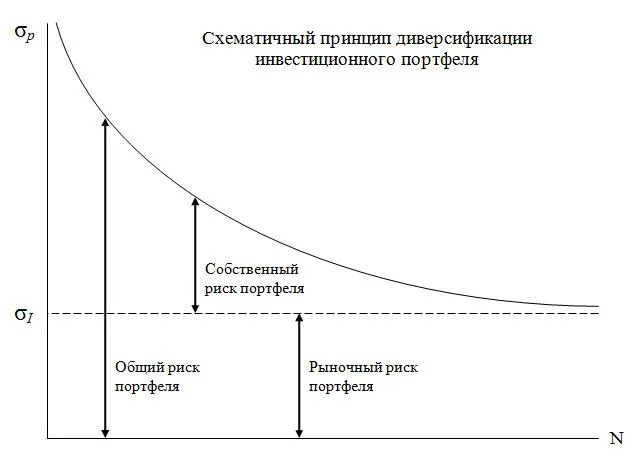
Photo: Lapross, Public domain, via Wikimedia Commons
The Comfort of a Crowded Portfolio
There is a particular confidence that comes from reviewing a brokerage account populated with names from technology, healthcare, consumer staples, energy, and financials. Twenty positions. Five sectors. The mental arithmetic feels reassuring: surely, if one area of the economy falters, the others will hold steady. It is an intuition that makes sense in ordinary times. The problem is that markets are not ordinary when it matters most.
This is the equity trap — the mistaken belief that spreading capital across many stocks within a single asset class constitutes meaningful diversification. In practice, a portfolio of twenty domestic equities can behave almost identically to the S&P 500 during periods of acute market stress, offering investors the administrative burden of stock selection with none of the protective benefits they assumed they were building.
At Equinox Broker, we believe precision in portfolio construction begins with an honest accounting of what diversification actually accomplishes — and what it does not.
How Correlation Collapses During Market Shocks
Under normal market conditions, individual stocks and sectors do exhibit meaningfully different return patterns. A pharmaceutical company developing a novel therapy and an oil services firm operating in the Gulf of Mexico face entirely different fundamental drivers. Their day-to-day price movements may show modest correlation. That statistical independence, however, tends to dissolve when systemic fear enters the market.
During broad selloffs — whether triggered by a Federal Reserve policy shock, a credit crisis, or a geopolitical disruption — correlations across equity sectors converge sharply toward 1.0. This phenomenon, well-documented in academic literature and painfully familiar to investors who lived through 2008 or the March 2020 collapse, occurs because institutional investors and algorithmic strategies liquidate positions indiscriminately. When redemptions demand cash, everything sells.
The practical implication is stark: the diversification benefit investors believed they had constructed vanishes precisely when they need it most. The portfolio that looked resilient on a calm Tuesday morning can decline in near-perfect unison on a volatile Friday afternoon.
Identifying Hidden Concentration in Your Holdings
Even investors who believe they have avoided sector concentration frequently carry it without recognizing it. Consider a portfolio that holds positions in a major technology company, a cloud infrastructure provider, a semiconductor manufacturer, a fintech platform, and a digital payments processor. These may be listed under different sectors in a brokerage's classification system, yet their revenue streams, interest rate sensitivity, and investor sentiment drivers are deeply intertwined.
Several diagnostic approaches can expose this hidden concentration:
Rolling correlation analysis. Calculating 60- or 90-day rolling correlations between individual holdings reveals how tightly positions move together over time — and how that relationship shifts during periods of volatility. A correlation coefficient above 0.75 between two positions should prompt serious reconsideration of whether both are earning their place.
Factor decomposition. Institutional portfolio managers routinely decompose returns into underlying risk factors — market beta, size, value, momentum, and quality. A portfolio heavily loaded on a single factor, particularly market beta, is far less diversified than its ticker count suggests. Retail investors can approximate this analysis using publicly available factor model tools.
Sector revenue overlap. Many companies classified in one sector derive substantial revenue from another. A major retailer generating significant income from cloud services, for instance, carries meaningful technology exposure regardless of how it is categorized. Reviewing revenue segment disclosures in annual filings provides clarity that standard classifications do not.
Why Sector Weighting Alone Is Insufficient
A common corrective instinct is to balance sector weights — ensuring that no single sector exceeds a certain percentage of the total portfolio. This is a reasonable starting point, but it addresses only one dimension of concentration risk.
Sector weights do not account for the fact that different sectors carry different levels of intrinsic volatility. An equal allocation to utilities and biotechnology does not produce equal risk exposure; the biotech sleeve will dominate the portfolio's volatility profile. Risk-weighted allocation — sizing positions based on their expected contribution to overall portfolio variance rather than their dollar value — is a more sophisticated and effective framework.
Furthermore, sector classifications themselves can be misleading. The emergence of platform-economy companies has blurred the boundaries between technology, communication services, consumer discretionary, and financial services in ways that traditional classification systems have not fully resolved.
Building Genuine Resilience: Beyond the Equity Universe
True diversification requires assets whose return drivers are structurally different from equities — not merely equities with different ticker symbols. This does not mean abandoning stocks entirely. It means recognizing their limitations as a sole vehicle for portfolio construction.
Several asset classes and strategies have historically demonstrated lower or negative correlation to domestic equities during stress periods:
- Investment-grade and Treasury bonds have served as reliable ballast during equity selloffs, though the relationship has been more variable in high-inflation environments.
- Commodities, particularly gold and energy-related instruments, often respond to macroeconomic forces that are orthogonal to equity market sentiment.
- Alternative strategies — including managed futures and market-neutral funds — can generate returns that are genuinely uncorrelated to equity indices over full market cycles.
- International developed and emerging market equities introduce currency dynamics and distinct economic cycles, though correlation with US equities has increased substantially over the past two decades.
The proportions in which these asset classes are combined should reflect an investor's time horizon, liquidity requirements, and tax situation — considerations that a qualified financial advisor can help translate into a coherent allocation framework.
The Precision Standard for Portfolio Construction
A portfolio is not diversified because it contains many names. It is diversified because its components respond to different economic forces in ways that are measurable, intentional, and consistent with the investor's objectives. The distinction is consequential.
Investors who mistake variety for resilience often discover the gap between the two at the worst possible moment — during a market dislocation when the ability to stay the course depends on actually having built the foundation they believed they had.
At Equinox Broker, the standard we hold for portfolio construction is one of genuine balance: not the appearance of diversification, but the structural reality of it. Identifying and eliminating hidden concentration is not a one-time exercise. It is a discipline that rewards consistent attention and periodic recalibration as markets, correlations, and individual circumstances evolve.